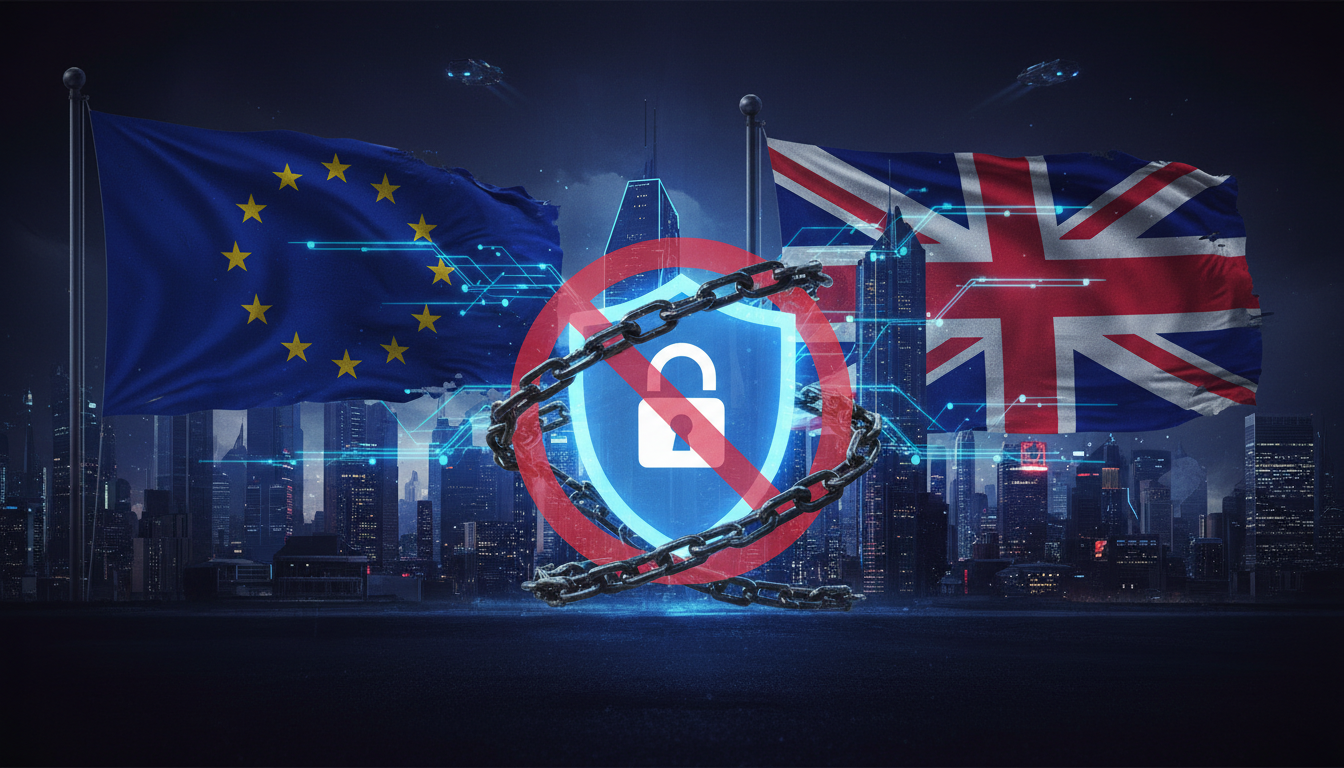
The bloc’s top digital official has signalled that VPN use could be restricted as part of a sweeping age verification push. If you use a VPN to access BBC iPlayer, catch up on Channel 4, or simply stay private online, it’s time to pay attention.
The European Union has become the latest major democratic authority to suggest that VPNs could face restrictions — and the implications for British expats, European streamers, and privacy-conscious users across the continent are significant.
EU Executive Vice-President Henna Virkkunen set alarm bells ringing on 29 April during a press conference tied to the launch of the bloc’s new age verification app. When asked whether children could simply use a VPN to bypass the new checks, Virkkunen replied: “Of course, it’s an important part of the next steps also to look at that it shouldn’t be circumvented.”
She didn’t say “VPN ban.” She didn’t need to.
A Pattern Emerging Across the West
What makes Virkkunen’s comments particularly concerning is that they don’t exist in isolation. Across the democratic world, a troubling pattern is taking shape:
- The UK has just passed the Children’s Wellbeing and Schools Bill, which requires adult content providers to take “reasonable anti-circumvention measures.” A separate government consultation on online harms is still ongoing — and the UK has already confirmed that VPNs could be age-restricted if they’re found to undermine online safety protections.
- France has seen politicians publicly state that “VPNs are next on the list” following the country’s teen social media ban.
- Utah, USA became the first democratic territory to actually enforce VPN restrictions as part of its age verification law — though a similar bill was defeated in Wisconsin following fierce public backlash.
- Australia is also weighing restrictions in the wake of its under-16s social media ban.
Belgian cryptographer Bart Preneel has called this trajectory “the slippery slope experts have been warning for.”
Why This Matters If You Watch BBC iPlayer from Abroad
For many of our readers — British expats living in France, Spain, Germany, or elsewhere in Europe — a VPN isn’t a luxury. It’s the only way to watch BBC iPlayer, ITVX, Channel 4, or any other UK streaming service from abroad.
These platforms are geo-restricted to UK IP addresses. A VPN gives you a UK IP address. That’s it. That’s the entire use case — and it’s entirely legal.
If EU member states begin restricting or blocking VPN services in response to Brussels’ signals, that access could be severely disrupted. Even if an outright ban never materialises, pressure on VPN providers to comply with local regulations could mean slower speeds, reduced server availability, or VPN apps being pulled from app stores in certain countries — as has already happened in Russia.
“A Complete Misunderstanding of Their Role”
The VPN industry and digital rights community have pushed back hard. The VPN Trust Initiative (VTI), an industry group, issued a stark warning to the UK government:
“Policies that weaken or restrict VPNs risk reducing online safety for the very users these proposals are intended to protect, without delivering commensurate benefits. Treating VPNs primarily as a ‘loophole’ is a complete misunderstanding of their role.”
Mozilla echoed this in a separate statement: “Restricting the use of privacy-preserving technologies undermines efforts to empower users to navigate the web safely and to develop digital literacy.”
The concern is real. VPNs aren’t just for streaming. They protect journalists, activists, remote workers, and ordinary people from hackers on public Wi-Fi. Millions of businesses rely on them daily. Restricting them to stop a minority of children bypassing age checks is, critics argue, like banning cars because some people speed.
Would a VPN Ban Even Work?
Here’s the thing: probably not. NordVPN has pointed out that it is technically impossible to block all known VPN and proxy IP addresses — the only way to truly enforce such a law would be to age-verify every internet visitor globally, regardless of location. Digital rights group Fight for the Future called Utah’s VPN law “a waste of money” and “impossible by design” to enforce.
Russia has spent years and enormous resources trying to suppress VPN use — and VPN providers keep adapting and finding ways around the blocks. If the Kremlin can’t do it, it’s hard to see how Brussels or Westminster will fare better.
What Should You Do Now?
Nothing drastic — yet. No EU-wide VPN ban is in place, and the UK’s consultation is still ongoing. But the direction of travel is clear, and it’s worth being prepared:
- Make sure your VPN subscription is active and up to date. If restrictions do come, they’re more likely to target app store availability or new sign-ups than existing users.
- Choose a reputable, privacy-focused provider with a strong track record of resisting government pressure — providers like Mullvad, ProtonVPN, or ExpressVPN have demonstrated commitments to user privacy.
- Stay informed. This is a fast-moving area of policy. We’ll be covering every development here as it happens.
The EU’s comments are a warning shot, not a verdict. But for anyone who values their online privacy — or simply wants to watch EastEnders from their apartment in Barcelona — this is a story worth following very closely.
Sources: TechRadar