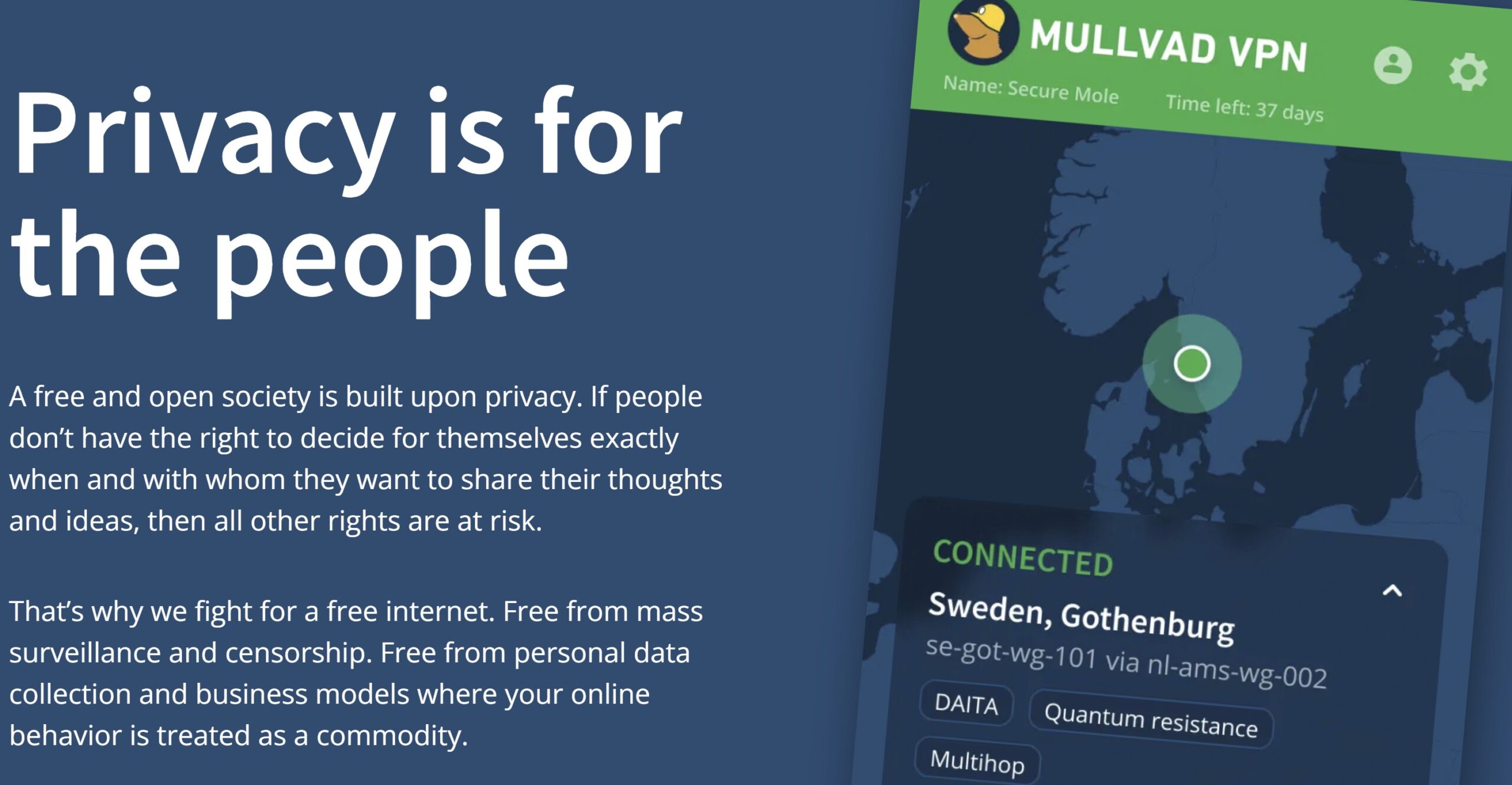
There’s something deeply ironic about a country that produced George Orwell systematically silencing an advert that warns about mass surveillance. But that’s exactly what’s happened to Swedish VPN provider Mullvad — and the story gets more absurd with every layer.
Mullvad’s “And Then?” campaign is a 30-second spot directed by Jonas Åkerlund, designed to raise awareness about the creeping normalisation of state surveillance. It’s aired without incident in Germany, Sweden, and the United States. But when the company tried to bring it to British television, Clearcast — the UK’s advertising clearance body — blocked it. Their reasoning? The ad’s “overall concept lacks clarity,” and its references to journalists, refugees, and yes, criminals, were deemed “inappropriate and irrelevant” and could “imply that the VPN facilitates criminal activity.”
Mullvad, understandably, called the decision “Kafkaesque and Orwellian.”
But here’s where it gets properly dystopian. When Mullvad pivoted to an outdoor campaign on the London Underground, Transport for London stepped in. A poster featuring a QR code linking to the banned commercial? Blocked. A second design showing the Mullvad logo over a Union Jack with the caption “Banned on British TV”? Also blocked. TfL’s logic was beautifully circular: you cannot encourage people to engage with a banned TV commercial.
So they banned the ad about the ban.
In the end, Mullvad was reduced to running posters that simply read “And Then?” — and even then, TfL forced them to change the colour scheme from white to black and yellow. The company has since taken the campaign overground and, in a gloriously defiant move, projected the banned advertisements directly onto London’s city walls at night.
The Bigger Picture
It would be tempting to dismiss this as a quirky advertising dispute, but it sits within a pattern that’s becoming increasingly difficult to ignore.
In the past year alone, the UK government used the Investigatory Powers Act to secretly order Apple to build a backdoor into its encrypted iCloud service — a move so extreme that Apple chose to pull the feature from the UK entirely rather than comply. The Online Safety Act, which attracted a petition for repeal with over 550,000 signatures, has already resulted in political material being blocked and Wikipedia’s accessibility being threatened. MPs have openly discussed forcing VPN providers to implement age verification, and the House of Lords has voted on amendments that would effectively restrict VPN use. In February 2026, the government announced plans to fast-track legislation requiring identity verification for VPN use.
Digital Minister Baroness Lloyd has stated that “nothing is off the table” when it comes to restricting internet circumvention tools. Windscribe’s CEO has called the House of Lords VPN ban amendment the “dumbest possible fix” to the child safety debate.
When You Can’t Even Criticise Surveillance
What makes the Mullvad saga particularly telling isn’t just that the UK is building a surveillance infrastructure — plenty of countries are doing that. It’s that when a company tries to criticise that infrastructure through a perfectly legal advertisement, the state apparatus quietly smothers it at every turn. Not with a dramatic ban or a court order, but through the grey bureaucracy of “clearance bodies” and transport authorities citing “lack of clarity.”
As Mullvad put it: “In the UK, mass surveillance and censorship reminiscent of authoritarian countries are on the verge of being introduced; and when we attempt to criticise this, we are stopped on very vague grounds.”
Countries that are confident in their democratic values don’t need to suppress adverts questioning surveillance. The fact that this ad ran freely in Germany, Sweden, and the US — but was systematically blocked at every level in Britain — should give anyone pause.
As The Nordic Times noted, when Swedish police raided Mullvad’s offices in 2023, they left empty-handed because the company simply doesn’t store customer data. That a company with that kind of privacy track record is being prevented from buying advertising space in a supposedly free country tells you rather a lot about where Britain is heading.
And then?