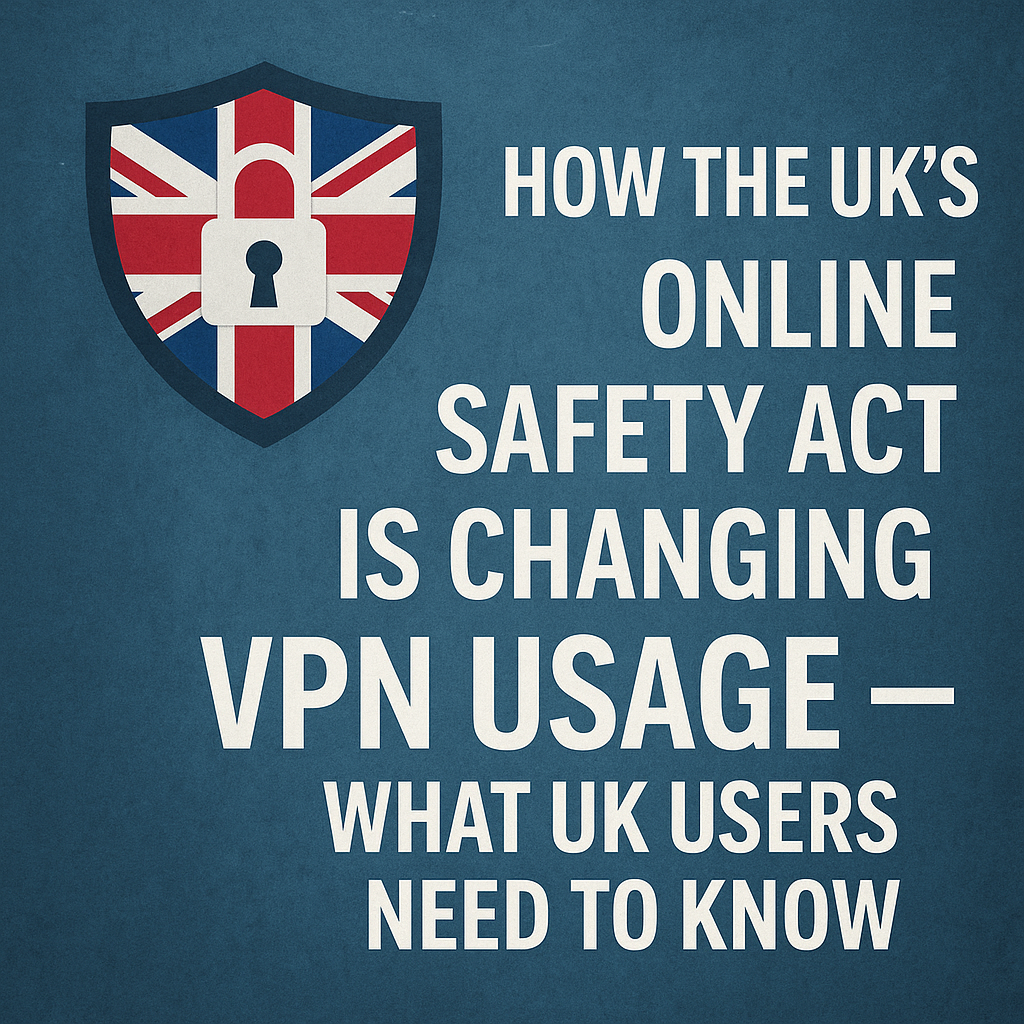
The UK’s Online Safety Act represents one of the most far-reaching attempts by a Western government to regulate online content in recent years. While much of the public debate has focused on social media platforms and child protection, the law also has important implications for privacy, access to information, and VPN usage in the UK.
As new age-verification requirements and content controls begin to affect everyday browsing, many UK users are asking the same questions:
- Is using a VPN still legal in the UK?
- Are more people turning to VPNs because of the Online Safety Act?
- Could VPNs be restricted or blocked in the future?
In this article, I’ll attempt to explain what’s changing, why VPN usage is increasing, and what UK users should realistically expect going forward.
What Is the UK Online Safety Act?
The Online Safety Act is ostensibly designed to make online platforms more accountable for harmful or illegal content. Its stated goals include:
- Protecting children from inappropriate material
- Reducing access to illegal content
- Forcing platforms to take stronger moderation measures
One of the most controversial aspects of the law is mandatory age verification for certain types of content — particularly adult material. Instead of simple “click-to-confirm” age gates, users may be required to prove their age using identity checks or third-party verification services.
For many people, this raises serious privacy concerns.
Why the Online Safety Act Is Driving Interest in VPNs
VPN usage in the UK has been steadily rising for years, but the Online Safety Act has accelerated interest for several reasons:
1.Privacy Concerns Around Age Verification
Many UK users are uncomfortable with:
- Uploading ID documents
- Linking browsing habits to real-world identities
- Relying on third-party age-verification databases
A VPN can’t magically make age verification disappear, but it does reduce the amount of data tied directly to a user’s IP address and location, which many people see as a basic privacy safeguard.
2.Location-Based Content Restrictions
Some websites now restrict or modify content depending on whether a visitor is accessing the site from the UK. Using a VPN server outside the UK may result in:
- Different versions of websites
- Fewer intrusive prompts
- Less aggressive content filtering
This is one of the most common reasons UK users turn to VPNs following regulatory changes.
3.General Mistrust of Expanding Online Surveillance
Even users who never access adult content are increasingly uneasy about the direction of travel: more monitoring, more verification, and more data collection.
For many people, a VPN is no longer just about streaming or torrents — it’s about maintaining a basic level of online anonymity.
Is Using a VPN Legal in the UK?
Yes. As of December 2025, VPNs are completely legal in the UK.
There is currently no law banning VPN services or making it illegal to use one for privacy, security, or general browsing. Businesses, journalists, remote workers, and ordinary consumers use VPNs every day.
However, it’s important to understand one key distinction:
A VPN does not make illegal activity legal.
If something is illegal without a VPN, it remains illegal with one. That said, using a VPN for privacy, security, or to avoid unnecessary tracking is fully lawful.
Could the UK Government Ban or Block VPNs?
At present, a full VPN ban would be extremely unlikely.
There are several reasons for this:
- VPNs are widely used by businesses and government employees
- Blocking VPNs at scale is technically difficult and easy to circumvent
- VPN bans tend to be associated with authoritarian regimes, not liberal democracies
That said, we may see indirect pressure, such as:
- Websites blocking known VPN IP ranges
- Increased scrutiny of VPN providers
- Attempts to shift responsibility onto platforms rather than users
This means choosing a high-quality VPN provider matters more than ever.
What Features UK VPN Users Should Look for Now
If you’re using a VPN in the UK in the era of the Online Safety Act, these features are especially important:
- Strict no-logs policy (preferably independently audited)
- Strong encryption (AES-256 or equivalent)
- DNS and IPv6 leak protection
- Large, frequently refreshed server networks
- Servers outside the UK and EU
Free VPNs are generally a poor choice, especially given the privacy issues that motivated many users to adopt VPNs in the first place.
The Bigger Picture: VPNs and Digital Rights in the UK
The Online Safety Act has sparked a broader debate about digital rights, privacy, and proportionality.
Supporters argue the law is necessary to protect vulnerable users. Critics warn it risks:
- Normalising identity checks for everyday browsing
- Creating large databases of sensitive personal data
- Encouraging censorship through over-compliance
VPNs sit at the centre of this debate — not as tools of wrongdoing, but as defensive privacy technology in a more regulated internet.
Final Thoughts
The UK’s Online Safety Act is changing how people interact with the internet, whether they realise it or not. As age verification, content controls, and online monitoring expand, VPNs are becoming less of a niche tool and more of a mainstream privacy solution.
For UK users, the key takeaway is simple:
- VPNs remain legal
- Privacy concerns are legitimate
- Choosing the right provider matters more than ever
As regulations continue to evolve, VPNs are likely to play an increasingly important role in how UK residents protect their digital freedom.